English
 Français



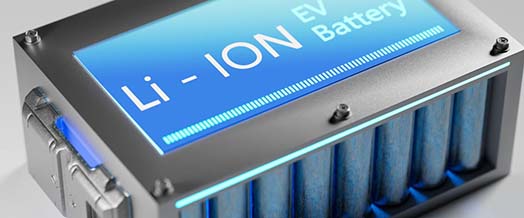
The term "new electric batteries" primarily refers to modern high-capacity energy storage technologies, including lithium-ion batteries, lithium iron phosphate (LFP) batteries, and future solid-electrolyte batteries.
These technologies enable the storage of a large amount of energy in a small volume. They are now widely used, both by individuals and by industries, in numerous fields such as new mobility devices (1), electric vehicles (2), portable electronic devices, portable industrial power tools and stationary energy storage systems.
(1) Personal Mobility Devices (PMDs): these are electric micromobility devices such as scooters, bicycles, kick scooters, electric skateboards, and monowheels.
(2) Virtually all current electric cars use lithium-ion batteries, the benchmark technology in the automotive industry thanks to its lightness, fast charging and high energy density.
Electric batteries: area of use
The growth of new batteries is primarily driven by the development of renewable energies and the electrification of transportation.
According to the International Energy Agency (IEA), the total volume of batteries used in the energy sector exceeded 2 400 GWh in 2023, four times the level in 2020.
Over the past five years, more than 2 000 GWh of lithium-ion battery capacity has been deployed globally, powering more than 40 million electric vehicles. This type of vehicle accounts for more than 90% of global battery demand.
In addition to transport and energy, other sectors are particularly affected by the use of electric batteries. In an average household, for example, there are no fewer than 19 devices equipped with electric batteries: smartphones, laptops, smart speakers, electric toothbrushes, electronic cigarettes and energy storage systems.
The large-scale deployment of this type of energy raises safety concerns. Throughout their life cycle, from manufacturing to recycling, including transport, use, recharging, storage, sorting and dismantling, electric batteries require specific preventive measures and rigorous risk management.
It is in this context that the insurance market is confronted with the emergence of new activities whose risks are still too difficult to assess and insure.
Industries most exposed to electric battery-related risks
The risks associated with electric batteries are primarily wrapped around six major sectors of activity:
- Electric mobility,
- Consumer electronics,
- End-of-life vehicle processing centers,
- Energy storage,
- Waste sorting centers,
- Marine transport.
Electric mobility
This sector encompasses electric vehicles, including cars, buses, trucks, skateboards, two-wheelers, and unicycles. It currently represents the largest share of battery demand, primarily for lithium-ion batteries.
According to the International Energy Agency (IEA), global sales of electric vehicles exceeded 17 million units in 2024, accounting for an increase of approximately 26% compared to 2023. By 2025, sales reached 20.9 million units, representing more than 25% of the global new car market.
These vehicles all feature high-capacity batteries, which increases exposure to risk throughout their life cycle: production, transport, use, charging, storage, parking, dismantling, recycling and disposal.
Read also | Evolution of global electric vehicle sales
Consumer electronics
Consumer electronics includes, in particular, phones, laptops, tablets, connected devices, household appliances, and various power tools.
This segment is characterized by very heavy use of these devices.
Consumer electronics accounts for approximately 11% of the global volume of lithium-ion batteries in use. Each year, more than 6.5 billion lithium-ion cells are manufactured specifically for this equipment, thereby multiplying the potential points of failure, particularly during charging or in the event of physical impact.
End-of-life vehicle processing centers
Professionals in the automotive industry, particularly end-of-life vehicle processing centers, are highly exposed to the risks associated with electric batteries. These facilities handle vehicles beyond repair or at the end of their useful life.
Although the electric battery recycling sector is still in its early stages, it is expected to grow as the number of electric vehicles on the road increases. These centers handle storage and dismantling various vehicle components. The risk of fire from lithium-ion batteries is particularly high during handling and disassembly operations.
This risk remains ever-present, even after dismantling and storage. An electric battery can, in fact, ignite several weeks, or even several months, after its removal, without any impact or external intervention. Lithium-ion batteries can also reignite, a phenomenon known as reignition, after being extinguished the first time.
Energy storage
This segment includes batteries designed for electricity storage, particularly in solar and wind power plants as well as industrial facilities.
In 2024, lithium-ion batteries accounted for 57.3% of the global stationary storage market. The high energy concentration in these systems increases the risk of large-scale fires, which can cause significant damage to infrastructure.
Waste sorting centers
Another sector particularly exposed to fire risks associated with lithium-ion batteries is waste sorting and treatment centers. Insurers now consider this activity to be borderline insurable. It is the subject of close market scrutiny with a view to tracking developments in the sector and progress made in preventing and managing risks associated with the presence of electric batteries in household waste.
In Australia, due to their presence in household waste, lithium-ion batteries are believed to be responsible for more than 10 000 fires per year in waste treatment facilities and collection trucks.
Marine transport
Marine transport is increasingly exposed to fires involving electric vehicles and devices equipped with lithium-ion batteries. Roll-on/roll-off (Ro-Ro) ships and container ships are particularly affected due to the risk of battery thermal runaway.
Several recent reports highlight that these fires are particularly difficult to control and can lead to the total loss of both the cargo and the ship.
In June 2025, the Morning Midas, which was carrying approximately 3 000 vehicles including 800 electric models, was ravaged by a fire off the coast of Alaska before sinking.