English
 Français


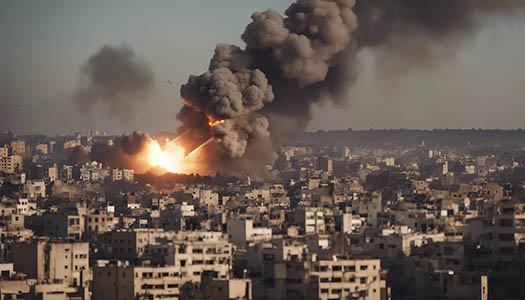
Insurance, as a risk-pooling mechanism supporting economic activity, finds itself at the center of the storm. It is, therefore, inevitably impacted by the intensification of geopolitical risks.
Insurers and reinsurers operating in the region are, therefore, compelled to reassess their exposure, adjust their underwriting policies, and tighten coverage conditions.
This reassessment particularly affects the most exposed lines of business, such as marine transport, aviation, trade credit, business interruption, energy, and travel assistance.
War risk insurance
War risk coverage is optional and can be underwritten in several sectors: aviation, marine transport, property damage, etc.
In marine transport, war risk coverage can be underwritten by either the shipowner or the charterer.
Based on the role and responsibilities of each party, the coverage protects against damage caused to the vessel and/or cargo by acts of war, hostilities, rebellions, insurrections, acts of terrorism, or sabotage related to a conflict. It also covers financial losses resulting from the capture, boarding, or detention of the vessel by a hostile force.
The contract may be concluded for a period of one year or for a single voyage (voyage insurance) sailing through high-risk areas such as the Strait of Hormuz or the Gulf of Aden. Upon notice, this coverage may be terminated by the insurer when the geopolitical situation deteriorates.
Moyennant préavis, cette garantie peut être résiliée par l’assureur lorsque la situation géopolitique se détériore.
The military escalation that began on 28 February 2026 in the Middle East, subjecting the marine transport market to severe strain. The risk level in the Persian Gulf, monitored by the Joint Cargo Committee (JCC), deteriorated as of 1 March 2026, rising from “Very High” to “Severe” (1).
(1) Global Cargo Watch List - GCWL: https://watchlists.spglobal.com/watchlists-viewer-public
Faced with this situation, insurers were left with two options: either to simply eliminate “war risk” coverage altogether, or to impose an additional premium on shipowners.
- The withdrawal of coverage for areas that have become uninsurable. Insurers have issued notices of termination ranging from 48 hours to 7 days, forcing shipowners to reroute their vessels. Past this deadline, ships and their cargoes are no longer covered against war risks in the Strait of Hormuz.
Several major marine insurers have, therefore, issued notices of cancellation of war risk coverage for ships transiting through Iranian waters and the Persian Gulf. These cancellations took effect on 5 March leaving hundreds of ships stranded or anchored near Hormuz. - The rise in “war risk” premiums. Even before the recent military escalation, the Persian Gulf was among the most sensitive areas, prone to premium increases. The cost of insurance to transit the Strait of Hormuz has consequently risen sharply in recent weeks.
“Hull” insurance, for example, which accounted for between 0.05% and 0.15% of a ship’s value before the conflict, reached 3% by mid-March 2026. These rate hikes will ripple through the entire supply chain, leading to an increase in the final cost of goods.
War in the Middle East: Limited impact on the insurance market
According to some analysts, the impact of the war in the Middle East is expected to remain limited on the market. Proponents of this view justify their assessment in the following six points:
- Rising premiums and stricter underwriting standards. During geopolitical crises, insurers exhibit technical discipline, strengthening their profitability by establishing a more favorable pricing environment.
- Financial strength of insurers and reinsurers. The capitalization levels of market participants remain sufficiently strong to absorb a moderate shock in the short term. However, a prolonged conflict or an escalation could significantly affect balance sheets.
- Impact limited to certain specialized segments, notably marine transport and aviation.
- Exclusions for armed conflicts in most contracts. Most policies, particularly travel insurance, do not automatically cover wars or hostilities.
- Exposure to political risks clearly identified, monitored, and priced.
- Risks underwritten by the London specialty market: War risk losses involve a limited number of players, including Lloyd’s of London. Lloyd’s primarily covers energy risks and cargo transiting through sensitive maritime routes such as the Strait of Hormuz and the Red Sea.
Cyberwarfare and Insurance
Geopolitical tensions are driving demand for cyber coverage, prompting insurers to adapt their products and underwriting policies. As a result, cyber policies, particularly corporate ones, are undergoing a major overhaul, especially for companies exposed to political risks in the Middle East.
More than 90% of current policies exclude attacks initiated by states. It is sometimes difficult to identify with certainty whether a malicious act originated from a state entity or not, leading to delays or denials of compensation.
Cost of the Middle East conflict on insurers
To date, the amount of compensation related to the Middle East conflict remains uncertain. Analysts characterize this situation as a “multi-line event,” simultaneously affecting several insurance lines: marine, aviation, property damage, energy, business interruption, trade credit, and political risks.
In the Middle East, insurers are not facing an isolated claim, but rather an extreme cluster of losses that could expose insurers and reinsurers to significant liability.
This is a delicate and unprecedented situation, prompting some countries, such as the United States, to establish a safety net of up to 40 billion USD, the amount earmarked to cover losses from a single class of business (marine transport: hull and cargo). This liability limit constitutes an implicit estimate of the insurable risk for marine losses.
Such a mechanism is generally activated when the private market can no longer absorb the risk, thereby underscoring the systemic nature of the conflict.
DFC marine reinsurance program
To restore commercial marine transport in the Persian Gulf and revive energy and trade flows through the Strait of Hormuz, the U.S. International Development Finance Corporation (DFC) is establishing a marine reinsurance program worth 40 billion USD.
Chubb, Berkshire Hathaway and AIG are the DFC’s primary partners for the implementation and management of this program.
The program compensates for losses incurred by vessels meeting certain eligibility criteria, with initial coverage focused on Hull & Machinery and Cargo insurance.
Rating agencies’ stance
In the event of a devastating conflict, recourse to exclusion clauses will not be sufficient to protect insurers and reinsurers. Rating agencies are therefore closely monitoring the unfolding events that are putting pressure on the entire market.
Indirect risk for insurers
According to S&P Global Ratings, the insurance market in the Gulf countries is expected to remain generally resilient in the short term. The various players (insurers and reinsurers) benefit from high levels of capitalization, adequate reinsurance capacity, and war risk exclusion clauses
The agency emphasizes that the main risk lies not only at the technical level but also at the financial level, with high stock market volatility likely to erode insurers’ capital.
Another adverse effect is that the conflict could slow down market growth due to weaker demand. However, increased interest in war risk coverage could partially offset this slowdown.
Finally, these forecasts remain contingent on the duration of the conflict. A prolonged escalation of hostilities would have a more significant impact on the sector’s performance.
Conditional resilience
According to experts at Fitch Ratings, a prolonged Middle East conflict would increase indirect market risks, particularly due to disruptions in supply chains
The agency notes that disruptions to gas flows in Qatar would create supply tensions for helium, leading to a price increase for this noble gas ranging from 50% to 200%. This price hike could result in increased financing needs for companies and exacerbate their financial vulnerability.
In such a context, insurers would be particularly exposed to an increase in claims in the credit insurance and business interruption sectors. The impact of a prolonged conflict would inevitably have significant consequences for all market participants.
Reinsurance under pressure
According to AM Best, the conflict in the Middle East is prompting reinsurers to reassess their exposure to risks in the region. An adjustment is expected during contract renewals, including:
- an increase in premiums,
- changes to coverage terms,
- exclusion clauses and coverage limits.
The regional direct market would therefore be forced to retain more risk, while local reinsurance capacity remains limited.
For now, losses incurred by the reinsurance market remain limited. These losses would result in isolated claims, as war risks are generally excluded from treaties or offered through specific endorsements.
Furthermore, the sanctions imposed on Iran for many years have limited reinsurers’ exposure to risks associated with that country. As a result, the damage caused by the conflict in the Middle East would have a limited impact on the global reinsurance market.