English
 Français



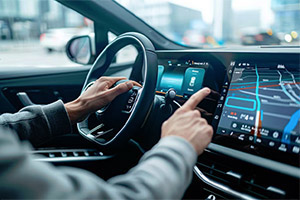
These days, motor insurers not only have to contend, as in the past, with rising claims frequency or a resurgence in fraud, but they also have to integrate the effects of climate disruption, rising repair costs, ongoing data collection and the challenges of digital transformation into their models, with an aggravating element in the form of soaring cyber risks.
Ongoing readjustment of motor premiums
With the help of new technologies, insurers can continuously adjust motor premiums. Data from connected vehicles and applications can be used to set rates based on usage (Pay As You Drive, Pay How You Drive).
In 2022, it is estimated that over 10 million drivers worldwide have a motor insurance contract based on telematics data.
In the United States, nearly 30% of insurers are integrating data analysis into their operations.
Rising vehicle repair costs
Repair costs are soaring as a result of global inflation, skyrocketing raw material prices, disrupted supply chains and geopolitical instability in certain strategic areas.
Furthermore, modern cars are increasingly sophisticated, incorporating new technologies such as sensors, cameras and electronic systems. Though these complex technologies improve safety (emergency braking and blind spot detectors), they, nonetheless make repairs much more onerous in the event of an accident.
In the United States, due to the increased complexity of modern vehicle repairs, the average cost of a motor claim had risen by 24% between 2017 and 2022, from 3 300 USD to 4 100 USD.
In France, due to the rising cost of spare parts and labor, the cost of repairing a car rose by 7% in 2023.
Rising motor claims experience
Although some regions are sustaining a decline in serious accidents thanks to the integration of advanced safety systems, improved infrastructures and intensified controls, the frequency of minor accidents remains high in many countries.
Despite progress, a deterioration in driver behavior has been observed in recent years. The increased use of telephones and other electronic devices while driving, fatigue, stress and speeding are all factors which contributed to the rise in road accidents.
Motor insurance fraud
Insurance fraud is a major challenge for the profession. In some countries, it accounts for up to 10% of all claims.
Motor insurance fraud refers to any deliberate act designed to mislead an insurance company in order to obtain an unjustified financial advantage. These fraudulent practices, such as misrepresenting claims or exaggerating the amount of damage, result in considerable financial losses for insurers with direct impact on the cost of cover, as losses due to fraud are passed on in insurance rates.
In 2023, the Association of British Insurers (ABI) reported 84 400 fraudulent claims in the UK, worth 1.1 billion GBP (1.4 billion USD). The motor business is the most affected, with 45 800 suspected cases. In the United States, 35.1 billion USD are lost each year as a result of these practices. France is no exception, with annual losses estimated at 2.7 billion USD, according to the French Insurance Federation (FFA).
In China, it is estimated that nearly 20% of motor claims are fraudulent.
The use of technologies such as artificial intelligence and predictive analytics is helping to better detect fraudulent claims.
Regulatory change
Motor insurance can be directly or indirectly impacted by:
- The introduction of new regulatory or financial standards affecting insurers or a specific policy (new taxes, new rates, …),
- The imposition of stricter rules for vehicles (changes to the highway code, …),
- Improving the level of certain coverages, in particular those concerning bodily injury following a road accident, …
Regulation and compliance can also be addressed from the angle of respect for individual freedoms.
Regulators around the world over are stepping up their demands for transparency and data protection, particularly since the development of telematics and connected cars. To avoid substantial fines and maintain consumer confidence, manufacturers and insurers are compelled to comply with these regulations.
Climate change
Motor insurance underwritings are increasingly affected by climate change and natural disasters such as floods, hurricanes, storms and earthquakes, …
For the motor line of business, the damage pertains in particular bodywork and glass breakage. The electrical system, engine and various mechanical components can also be damaged by flooding and rising water levels.
On a global scale, insured losses (all lines of business combined) caused by natural disasters amounted to 118 billion USD in 2023. Swiss Re estimates these losses at 110 billion in 2021, with a significant proportion linked to vehicle damage. This is a considerable cost, which insurers will inevitably pass on in their insurance premiums.
Vehicle damage caused by natural disasters:
- Floods in China (2021): 238 000 vehicles damaged.
- Hurricane Harvey in the United States (2017): 422 000 vehicles damaged.
- Hurricane Irma in Florida (2017): 215 000 vehicles damaged.
- Hurricane Katrina in the United States (2005): 300 000 vehicles damaged.
- Storm Sandy (2012): 250 500 damaged vehicles.
The above figures refer only to the number of vehicles covered by insurers. The number of damaged vehicles is much higher, due to the lack of insurance against catastrophic risks.
The challenges of digital transformation
The profound and accelerating digital transformation of the motor insurance sector is creating new challenges for insurers.
Competition
Insurers are up against increased competition, amplified by the emergence of start-ups, which stand out for their innovative and customized offers.
To remain competitive, traditional insurers have no choice but to adapt to the demands of digitalization. Increasingly demanding, the new consumer is more volatile than in the past, remaining on the lookout for tailor-made solutions that optimize their expectations.
Autonomous cars
There are five levels of autonomous driving. The adaptation of traditional models and the notion of liability have triggered concerns for insurance from the third level (conditional automation) to the fifth level (full automation).
Although autonomous vehicles are still in the development phase, by 2030 they could account for up to 15% of the world's vehicle fleet.
Notwithstanding insurers' difficulties in assessing risk, autonomous vehicles are seen as a key factor in reducing claims in the long term. Leading insurers are working to anticipate these changes by adapting their motor insurance offers to diverse evolutions.
These insurers are working with carmakers to integrate telematics technologies to better assess risk and offer fairer rates based on driving.
Read also | Motor insurance, a booming market