English
 Français




AXA: the case of business interruption insurance without material prejudice
 In 2020, AXA France was ordered to pay compensation to restaurant and hotel owners after initially refusing to cover their operating losses related to administrative closures imposed during the Covid-19 crisis.
Eventually, the insurer agreed to pay 300 million EUR (337.861 million USD) to policyholders. A provision of 1.8 billion EUR (2 billion EUR) was also set aside to anticipate other similar claims.
The dispute was settled by the courts. However, the French Prudential Supervision and Resolution Authority (ACPR) had a major influence on the sector, restraining insurers' ability to reject massive claims. Its role was preventive and incentivizing. Among other things, it:
- reminded insurers of their duty of transparency regarding contractual guarantees, particularly in times of crisis,
- encouraged insurers to find negotiated solutions, even though AXA initially opted for legal action.
Read also | Typology of insurance supervisory authorities
Compensation for business interruption losses in the United Kingdom
In 2021, the UK Supreme Court handed down a ruling, requiring insurers to compensate approximately 370 000 businesses for business interruption losses incurred during the lockdowns related to the Covid-19 pandemic. Compensation for the first lockdown was estimated at 1.2 billion USD.
This decision followed legal action brought by the Financial Conduct Authority (FCA). This recourse, with its major impact on the UK insurance sector, served as a reference for other countries where similar litigation was in process.
China: illegal alliance to fix commissions on insurance premiums
In 2014, the National Development and Reform Commission (NDRC), China's antitrust agency, imposed fines totaling 18 million USD on 23 insurance companies and the Zhejiang Insurance Association. The investigations initially targeted 32 companies.
The companies were accused of forming an illegal alliance to fix commissions on premiums. The Zhejiang Insurance Association, which organized these agreements, was also fined 81 000 USD, the maximum fine for an association.
Although the China Insurance Regulatory Commission (CIRC) was the insurance supervisory and regulatory authority in China at the time, its direct role was limited compared to that of the National Development and Reform Commission (NDRC), China's antitrust agency. The latter had investigated and detected violations, enforced antitrust law, imposed fines, and published decisions. The NDRC was the enforcement body for antitrust law.
The CIRC was the sectoral supervisory authority at the time, responsible for ensuring that insurance companies complied with industry rules. It could take additional regulatory measures if necessary, but was not the authority in charge of the purely antitrust aspect of the case.
United States: The fall of AIG
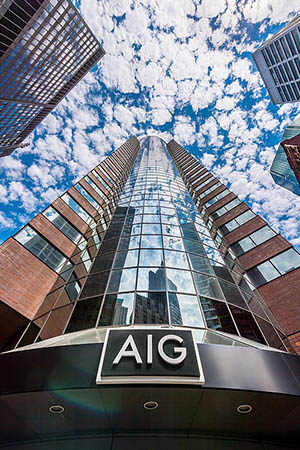 The world's third-largest insurer when the 2008 financial crisis hit, American Insurance Company (AIG) quickly found itself on the brink of bankruptcy due to its portfolio's overexposure to derivatives. In the nine months leading up to the crisis, the US insurer accumulated losses of 18 billion USD (some post-crisis estimates exceed 100 billion USD).
In this case, the role of the New York State insurance regulator (at the time, mainly the New York State Insurance Department, now part of the New York State Department of Financial Services) was crucial but controversial.
Regulatory oversight was insufficient due to a regulatory vacuum. The holding company's insurance activities, which were considered solid, overlooked its unregulated activities and those responsible for credit default swaps (CDS). In fact, insurance regulators focused the controls on the reserves and solvency of traditional insurance subsidiaries, but did not monitor the systemic risks posed by derivatives. The latter were considered outside the scope of supervision by the insurance regulatory authority.
This situation led to failures in detecting the risks facing the group. Unlike banks supervised by the US Federal Reserve (Fed) or the Securities and Exchange Commission (SEC), AIG's non-insurance activities escaped clear federal regulation. The New York State Insurance Department failed to identify AIG's massive exposure to CDSs in time, leading to losses of several billion dollars when the real estate market collapsed.
In the midst of the crisis, regulators realized that the collapse of AIG would have catastrophic repercussions on the global financial system due to the CDSs sold to major banks. As a result, the US Treasury and the Federal Reserve intervened with a 182 billion USD bailout. Insurance regulators did not play a central role in this decision because the problem stemmed from non-insurance activities.
Post-crisis reforms
The insurance supervisory authority underestimated the systemic risks associated with AIG's non-insurance activities. Its role was limited by the regulatory framework at the time, which strictly separated the supervision of insurance from that of financial markets. The crisis revealed the need for better coordination between regulators for hybrid financial groups such as AIG.
After 2008, regulators strengthened their supervision of insurers' non-traditional activities. The adoption of the Dodd-Frank Act in 2010 placed large companies such as AIG under the supervision of the US Federal Reserve (Fed). This law does not directly regulate insurance in the same way as banking, but it introduces oversight mechanisms and regulations that can include the largest insurers. This law has, therefore, resulted in:
- The establishment of the Financial Stability Oversight Council (FSOC). This council can designate certain insurers as “systemically important financial institutions” (SIFIs). These insurers are then subject to increased oversight by the Federal Reserve and stricter capital requirements to prevent potential bankruptcy from destabilizing the economy,
- Strengthening the regulation of derivatives (such as swaps), which many insurers use to manage their risks,
- Establishing the Consumer Financial Protection Bureau (CFPB), whose consumer protection rules may affect certain insurance products, particularly those related to credit,
- The creation of the Office of Financial Research (OFR), whose role is to collect and analyze data to identify threats to financial stability, which may include information from the insurance sector.
After the 2008 crisis, the National Association of Insurance Commissioners (NAIC) also tightened capital reserve rules for insurers.
In 2013, AIG was designated as a systemically important financial institution (SIFI). In 2017, following the restructuring of the American giant, AIG no longer enjoys SIFI status.
Saudi Arabia
The Saudi Arabian Monetary Authority (SAMA), replaced in November 2023 by the Insurance Authority (IA), levied sanctions on several insurance companies for non-compliance with regulations:
- Suspension of activities: In 2017, SAMA prohibited three insurance companies - Arabian Shield Cooperative Insurance, Saudi Indian Company for Cooperative Insurance (Wafa Insurance), and Malath Cooperative Insurance and Reinsurance - from issuing or renewing motor insurance policies due to violations of pricing and claims handling rules,
- Fines: The Health Insurance Council imposed 14 fines totaling 2 719 100 SAR (724 000 USD) on health insurance companies for non-compliance with laws and regulations.
- Suspension of stock market listing: The Capital Market Authority (CMA) suspended the listing of Weqaya Takaful Insurance and Reinsurance Company shares in 2014 due to significant losses and violations of financial regulations.
United Arab Emirates
The Central Bank of the United Arab Emirates (CBUAE) has taken action against insurance companies for non-compliance with regulations.
- License revocation: In 2024, the CBUAE revoked the license of Galaxy Insurance Brokers for non-compliance with data protection regulations.
Kuwait
- License revocations: In 2023, the Insurance Regulatory Unit (IRU) suspended the listing of shares of several local insurers until they published their quarterly financial results in accordance with IFRS 17 and 9 standards.
- Regulatory reforms: Following the introduction of new regulations in 2021, approximately 40-50% of local insurers failed to meet the requirements or did not apply for a new license, resulting in a reduction in the number of insurers in the market.
South Africa
- Old Mutual Life Assurance Company Limited
In 2020, the company was fined 15.9 million ZAR (1 million USD) for non-compliance with customer due diligence obligations, including failure to verify customer relationships.
- Safrican Insurance Company Limited
Administrative sanctions for non-compliance with the provisions of the FIC Act were imposed on the company following an inspection carried out in 2020.
Reason for the sanction: failure to comply with regulatory obligations relating to anti-money laundering and counter-terrorist financing.
- Centriq Life Company
The company was subject to an administrative sanction following the late submission of its fourth quarter 2022 report. Reason: failure to comply with regulatory deadlines.
Nigeria, sanction imposed by Naicom on Alliance Insurance Plc
On 30 October 2024, the National Insurance Commission (NAICOM) revoked the company's board of directors and senior management, citing prolonged insolvency and inability to meet its obligations to annuitants and policyholders. This decision follows an in-depth review of the corporate's financial situation, governance, and operational practices.
Kenya
The Kenya Insurance Regulatory Authority (IRA) has levied record fines on several insurers for violations such as:
- Delays in paying claims. For example, Invesco Insurance was fined 7.9 million KES (50 000 USD) for delayed claim payments.
- Failure to submit financial statements. Companies such as Trident Insurance and Xplico Insurance were penalized for failing to submit their financial reports on time..
- Capitalization deficit. In 2023, 17 insurers and 15 brokers were fined a total of 31.7 million KES (200 600 USD) for failing to meet minimum capitalization requirements.