English
 Français



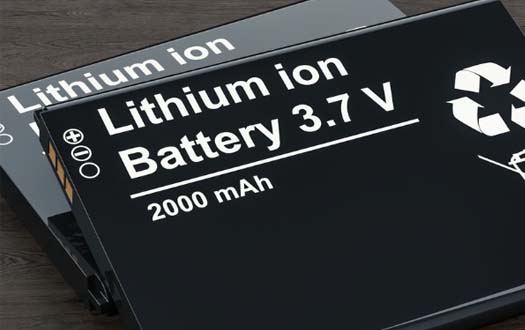
Energy transition is driving the rapid deployment of devices equipped with electric batteries. Many sectors are affected by this new development, including transportation, communications, electronics, manufacturing, healthcare, and energy storage.
While this technology plays a central role in the « electrification (1) » of the economy and the reduction of carbon emissions, its large-scale adoption brings new challenges.
Issues related to usage, safety, liability, and risk prevention are increasingly being raised, prompting insurers to adopt new approaches to claims assessment and management.
(1) Electrification is the replacement of fossil fuels with electricity to power appliances, cars or factories.
Why are lithium-ion batteries a concern for insurers?
Electric batteries, particularly lithium-ion models, are especially susceptible to thermal runaway and the release of toxic gases, an uncontrollable chain reaction that can lead to violent fires and, in some cases, explosions.
This failure can be caused by physical impact, a manufacturing defect, overcharging, contact with moisture, battery aging, overheating, extreme weather conditions, or an internal or external short circuit. These failures can trigger a malfunction within the battery cells, making the incident difficult to control.
All these factors make lithium-ion batteries a specific risk for insurers, due to the severity of the claims and the complexity of handling them.
It is worth noting that in recent years, several domestic and even industrial fires have been started by battery catching fires. The fires mainly originate in storage areas (parking lots, building basements, industrial warehouses) or at charging stations and power cables.
In France, according to statistics from insurance adjusters, the number of fires linked to lithium-ion batteries has increased nearly seven times between 2017 and 2024.
In South Korea, according to the National Fire Agency, 678 fires involving lithium-ion batteries were recorded between 2020 and 2024, with approximately 70% of these fires being attributed to electric scooters.
In Australia, fire departments across different states recorded more than 1 000 fires linked to lithium-ion batteries in 2023, primarily in recycling centers and in homes involving micromobility vehicles.
In the United Kingdom, a peak of 211 fires involving electric bikes and scooters were recorded in 2024, compared to 207 in 2023 and only 2 in 2017. These fires caused 8 deaths in 2024, mainly because of thermal runaway in lithium-ion batteries.
In the United States, fires involving batteries in electric bicycles and scooters have increased sharply in recent years. New York City alone recorded 277 fires in 2024, resulting in 6 deaths and several injuries. These events have led to stricter regulations on batteries and chargers.
Faced with these new challenges, insurance professionals are closely monitoring the development of electric batteries and their applications. This watch allows them to anticipate evolving risks, adapt their underwriting policies, and support progress made in risk prevention and management.
The main insurance coverages related to lithium-ion batteries
The hazards associated with the use of lithium-ion batteries are now among emerging risks, with consequences extending beyond mere physical damage to the device itself. They can affect a wide range of activities, impacting on industrial facilities, supply chains, electronic equipment, and business continuity. In this context, several insurance plans can be underwritten to cover these various losses.
Property damage: A battery fire can cause significant damage affecting not only the equipment that caused the incident, but also buildings, facilities, machinery, stocks and security devices.
Business interruption: an incident may lead to a partial or total interruption of the company's activity, due to the time required for technical assessments, facility repairs, decontamination and site reconstruction.
Third-party liability: the company's liability may be invoked when a loss results from a manufacturing defect, insufficient preventive measures, unsuitable storage conditions or failure to comply with safety rules.
The repercussions may then include bodily injury, property damage, or environmental damage. In some cases, the liability of managers may also be invoked.
Product recalls, particularly in the electronics and electric vehicle sectors, are also a major issue due to their high costs and their impact on the company's image and reputation.
From an environmental perspective, lithium-ion batteries can release hazardous substances if damaged or in the event of a fire, posing risks of air, soil, or water pollution. Costs associated with waste management and cleanup are included in this risk.
Digital risks: when batteries power critical equipment or infrastructure, an incident can cause computer systems to shut down, data to be lost, or essential services to be disrupted.
Read also | Evolution of global electric vehicle sales