English
 Français


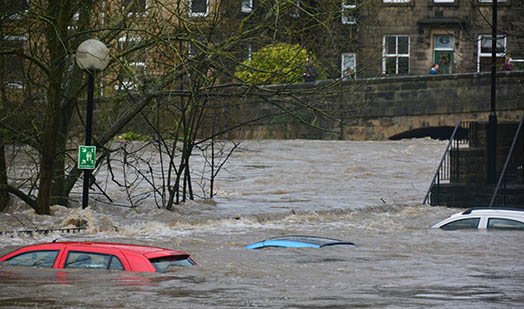
Global warming now stands as one of the main risks to the global economy. Beyond rising temperatures, this phenomenon intensifies certain extreme events and makes them harder to predict. Droughts, heat waves, wildfires, floods, and storms do not play out in the same way across different regions, which complicates the assessment and pricing of risks for the insurance market.
This trend toward global warming has become particularly pronounced in recent times. As a result, 2025 ranks among the hottest years on record, while August 2026 set a new global heat record. The global average temperature reached 1.65 °C above pre-industrial levels, illustrating the persistence of increasingly extreme weather conditions.
This climate shift is triggering growing economic losses, gradually affecting households, businesses, infrastructure, and public finances. It is also placing increasing pressure on the insurance sector: rising claims costs, higher premiums, coverage restrictions, reduced available capacity, and increased reliance on reinsurance and alternative risk transfer mechanisms.
Property and economic damage related to natural disasters
Between 2006 and 2025, natural disasters caused average annual losses of 349 billion USD. 2011 remains the costliest of the period, with nearly 700 billion USD in losses, including 235 billion USD from the tsunami in Japan alone.
2019 saw the highest number of events (449 in a single year), and 2010 remains the deadliest, with nearly 300 000 deaths, including more than 222 000 from the Haiti earthquake alone.
Impact of natural disasters on businesses
According to the 2026 Allianz Risk Barometer, natural disasters rank fifth among global business concerns. Business interruption ranks third, a risk that can be significantly exacerbated by extreme weather events.
Certain sectors are particularly vulnerable to such conditions due to their dependence on natural resources; this is the case for agriculture, fishing, energy, and tourism, where operating conditions have been permanently altered.
For businesses, climate risk plays out in two ways:
- Direct costs resulting from damage to buildings, equipment, and infrastructure;
- Indirect costs related to business disruption.
Several recent events illustrate the scale of this risk, the consequences of which are no longer limited to property damage:
- Hurricane Katrina in 2005 had already resulted in tens of billions of dollars in losses due to business disruptions.
- The 2011 tsunami in Japan brought the country’s production lines to a standstill, a shutdown that set companies back 79 billion USD.
- The 2011 floods in Thailand disrupted automotive, electronics, and IT production chains worldwide. Operating losses totaled 26 billion USD, and direct property damage amounted to 21 billion USD.
- Hurricane Sandy, which lashed the Caribbean and then the U.S. Northeast in late October 2012, resulted in 26 billion USD in lost revenue for businesses that were shut down.
- In 2024, Hurricane Beryl forced the chemical company Dow to partially shut down an ethylene production plant in Texas, United States. This shutdown cost Dow between 125 USD million and 150 million USD in lost production and additional expenses.
- In 2025, floods in southern Thailand threatened nearly 90 000 metric tons of production at the world’s leading rubber producer.
Other consequences
- Disruption of transportation and supply chains,
- Rising insurance costs in vulnerable areas,
- Significant spending to strengthen infrastructure and adapt production processes,
- Relocation of operations.
Impact on households
Climate-related disasters damage individuals’ property and erode their incomes. According to the World Bank, approximately 4.5 billion people are highly exposed to at least one extreme weather event, 2.3 billion of whom live on less than 6.85 USD per day.
The consequences can, therefore, lead to long-term financial difficulties. Following Hurricane Harvey, which struck Houston in August 2017, a significant increase in financial hardship was observed in flooded neighborhoods: job losses, unpaid rent, and household debt.
Global warming also affects workers’ health and productivity. In the Middle East, North Africa, Afghanistan, and Pakistan, three out of ten businesses already operate under extreme heat conditions for more than 100 days a year.
Prolonged high temperatures reduce sales, weigh on productivity, and lead to a decline in workers’ incomes across all affected regions.
Impacts on agriculture, infrastructure, and supply chains
Agriculture
Between 1991 and 2023, climate-related disasters (floods, heatwaves, droughts, etc.) set global agriculture back nearly 3 800 billion USD, an annual average of more than 118 billion USD, or 5% of global agricultural GDP. According to the Food and Agriculture Organization of the United Nations (FAO), droughts alone account for twice that amount in damages.
Due to the extent of agricultural land and the size of the rural population, the breakdown of damages by continent places Asia in first place, with 40% of losses, or 1 530 billion USD. The Americas rank second with 19% (713 billion USD), followed by Africa with 16% (611 billion USD).
However, as a proportion of its agricultural economy, Africa is the hardest hit: losses their account for 7.4% of agricultural GDP, a rate that reaches 13.4% in West Africa, the most severely affected sub-region.
Infrastructure
Natural disasters can damage power grids, roads, railways, water pipelines, and telecommunications networks. They can also cause disruptions to economic activity, with economic repercussions extending far beyond physical damage.
According to the UNDRR (1), floods, droughts, and extreme heat events alone cause an average of 295.5 billion USD in annual losses to critical infrastructure worldwide. Asia accounts for the largest share of these losses, at 126.9 billion USD, followed by the Americas (103.7 billion USD) and Europe (56.7 billion USD).
(1) United Nations Office for Disaster Risk Reduction
Supply chains
The World Economic Forum ranks extreme weather events as the second most dreaded risk globally over the next two years, and the first most feared risk over the next ten years.
This ranking reflects the growing importance of this risk for all economic actors, particularly in terms of securing supply chains.
The Panama Canal provides a concrete example of this risk. This waterway handles approximately 5% of global trade. In 2026, a drought linked to the El Niño phenomenon forced authorities to reduce daily traffic from 36 to 32 ships. This restriction led to a 20% decrease in the number of ships and a 17% decrease in the tonnage transported.
In Germany, low-water conditions on the Rhine and Danube, observed in 2018 and 2022, and again in 2026, disrupted river transport, leading to higher costs and delays in the delivery of raw materials to major European industrial hubs, particularly in the chemical, steel, and energy sectors.
Effects of natural disasters on investments and borrowing costs
Climate risk is not limited to property damage or disruption of economic activity. It can also weigh on the financial market by increasing the cost of financing and tightening credit conditions for all market participants: companies directly affected by a natural event and those experiencing indirect effects.
According to a study published in “The Journal of Finance”, a hurricane striking the United States can lead to higher borrowing costs for businesses located in areas unaffected by the event. Banks are increasingly factoring climate risk into their lending terms.
This trend is also evident in the European real estate market. According to the European Central Bank (ECB), climate-related risk now influences mortgage lending conditions in eight countries in the eurozone: Belgium, France, Germany, Ireland, Italy, the Netherlands, Portugal, and Spain.
Between 2010 and 2023, homes most exposed to climate risks faced higher interest rates than those with low exposure. This gap has widened over time.
For the most recent loans, the difference stands at approximately 24 basis points between homes with an average risk level and those with no risk.
Read also | Natural disaster risk mapping
Effects of natural disasters on public finances
Climate-related disasters place direct pressure on public finances. Their consequences can reduce government revenue, affect economic activity, and increase certain expenditures related to emergency response, cleanup, restoration, and reconstruction.
According to a study by the International Monetary Fund (IMF) covering 164 countries over the past three decades, the effects of climate-related disasters vary depending on the nature of the event. In emerging and developing countries, a drought leads, on average, to a 1.4-percentage-point decline in GDP growth and a 0.7% decrease in government revenue as a percentage of GDP.
Storms also weigh on growth, leading to a significant increase in public spending, particularly on cleanup and reconstruction.
Jamaica provides a concrete example of this budgetary pressure. After Hurricane Melissa struck on 28 October 2025, property damage was estimated at 8.8 billion USD, or 41% of the country’s GDP.